Stroud
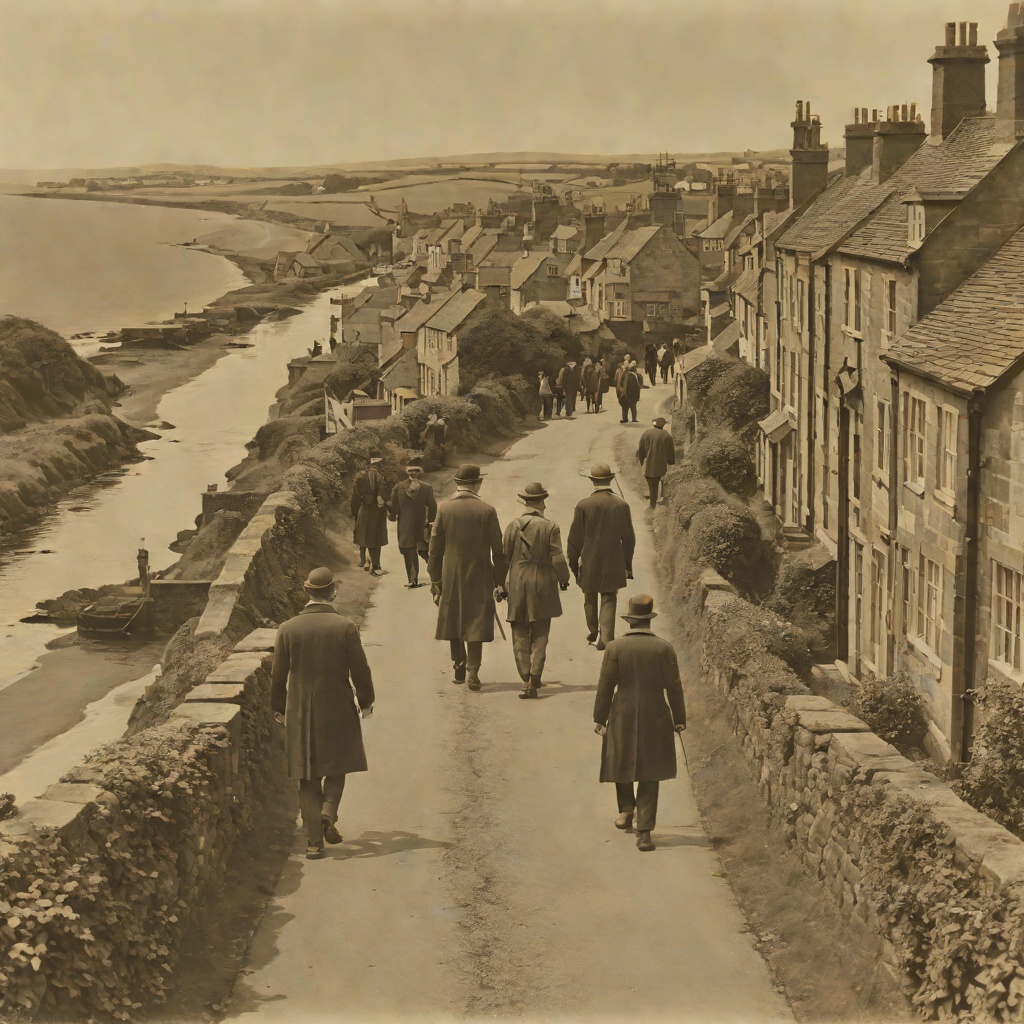
The Unlikely Pilgrimage of Harold FryStroud, a town in Gloucestershire, holds a pivotal place in Harold Fry's pilgrimage. It is not a destination but a turning point, the place where his faith in the walk collapses and is then miraculously restored. The town marks the geographical and spiritual low point of his journey, the moment when the ordinary act of putting one foot in front of the other nearly fails him, and the place where a stranger's simple generosity gives him the strength to continue. Stroud is where Harold's walk transforms from a desperate errand into a genuine act of faith.
The Crisis of Faith
Harold's arrival at Stroud is preceded by a profound crisis. On the twenty-sixth day of his journey, six miles south of the town, he decides to stop. He had made a significant error in his direction, retracing five miles back to Bath before walking a further four days along the A46. The mistake deeply disturbs him, and the going has become brutally hard. The hedgerows have reduced to ditches and drystone walls, and the land stretches out endlessly to the left and right, with giant pylons marching as far as he can see. He observes these things but feels no interest in why they occur. The road, he feels, is something that never stops and never yields its promise. It takes every scrap of himself to keep moving when he knows in his heart he cannot make it. He questions why he has wasted so much time looking at the sky and the hills, talking to people, and thinking about life, when he could have been in a car. He despairs that Queenie cannot keep living just because he has told her to do so. He lowers his head to avoid seeing the birds swooping overhead or the traffic passing in a flash, feeling more lonely and left behind than he would have done up a faraway mountain.
The Decision to Stop
It is in this state of despair that Harold makes his decision to stop. He has been walking for over four weeks, having set out from Kingsbridge with the simple intention of posting a letter to Queenie Hennessy, a former colleague dying of cancer. His plan had been to head north, mentioning Exeter, Bath, and possibly Stroud as his intended route. Now, on the outskirts of Stroud, the weight of the journey and the impossibility of his promise have finally overwhelmed him. He feels he cannot go on. The decision is not a dramatic collapse but a quiet surrender, a recognition of his own limitations. He has retraced his steps, made a mistake about his direction, and the physical and emotional toll has become too great. The road ahead seems endless, and his faith in the walk, and in himself, has evaporated.
The Sleeping Bag and the Act of Kindness
Just as Harold has given up, a small miracle occurs. As the road dips towards the centre of Stroud, he passes a row of red-brick terraced houses, one with scaffolding and ladders and a skip of building rubble parked in the road. A shape catches his eye. He stops and pushes aside several pieces of plywood to find a sleeping bag. He gives it a shake to blow off the dust, and although it is ripped and the padding bulges like a soft white tongue from the hole, the tear is only superficial and the zip is still intact. Harold rolls the sleeping bag into a bundle and walks to the house. There are already lights downstairs. When he hears Harold's story, the owner calls his wife, and they also offer a fold-up chair, a Teasmade and a yoga mat. Harold assures them the sleeping bag is more than enough. The wife warns him to be careful, telling him that only last week their local petrol station was held up by four men with guns. Harold promises he is vigilant, although he has come to trust in the basic goodness of people. The dusk deepens and settles like a layer of fur on the outlines of the roofs and trees. This simple act of generosity, the gift of a discarded sleeping bag, becomes the turning point of his entire journey.
The Restoration of Faith
After the night in the barn, Harold continues to sleep outside, choosing dry places and being careful not to upset things. He washes in public lavatories, fountains and streams, and rinses his clothes where no one is watching. He thinks of that half-forgotten world lived in houses and streets and cars, where people ate three times a day, slept by night, and kept each other company. He is glad they are safe, and he is glad too that he is at last outside them. The kindness of the woman with food and that of Martina come back to him. They had offered him comfort and shelter, even when he was afraid of taking them, and in accepting he had learned something new. It was as much of a gift to receive as it was to give, requiring as it did both courage and humility. He thinks of the peace he has found, lying in the sleeping bag in a barn. Harold lets these things play in his mind while the land melts as far as the sky. Suddenly he knows. He knows what he must do in order to get to Berwick. He must remain true to the feeling that had inspired him in the first place. It doesn't matter that other people would do it in a different way; in fact this is inevitable. He will keep to the roads because, despite the odd fast car, he feels safer there. It doesn't matter that he has no mobile phone, or that he has not planned his route, or brought a road map. He has a different map, and that is the one in his mind, made up of all the people and places he has passed. He will also stick to his yachting shoes because, despite the wear and tear, they are his. He sees that when a person becomes estranged from the things they know, and is a passer-by, strange things take on a new significance. And knowing this, it seems important to allow himself to be true to the instincts that make him Harold, as opposed to anyone else.
The Journey Resumes
With his faith restored, Harold's walk is transformed. He takes the A-roads, B-roads, lanes and tracks, following the compass quivering northwards. He goes by day or by night, as the mood takes him, mile after mile after mile. If the blisters are bad, he binds them with duct tape. He sleeps when the need for it comes, and then he returns to his feet and walks again. He goes under the stars, and the tender light of the moon, when it hangs like an eyelash and the tree trunks shine like bones. He walks through wind and weather, and beneath sun-bleached skies. It seems to Harold that he has been waiting all his life to walk. He no longer knows how far he has come, but only that he is going forward. The pale Cotswold stone becomes the red brick of Warwickshire, and the land flattens into middle England. He reaches his hand to his mouth to brush away a fly, and feels a beard growing in thick tufts. Queenie would live. He knows it. The crisis at Stroud, and the kindness he received there, has given him a new understanding of his journey. He is both a part of things, and not. He is a pilgrim, and the road ahead is his life.